
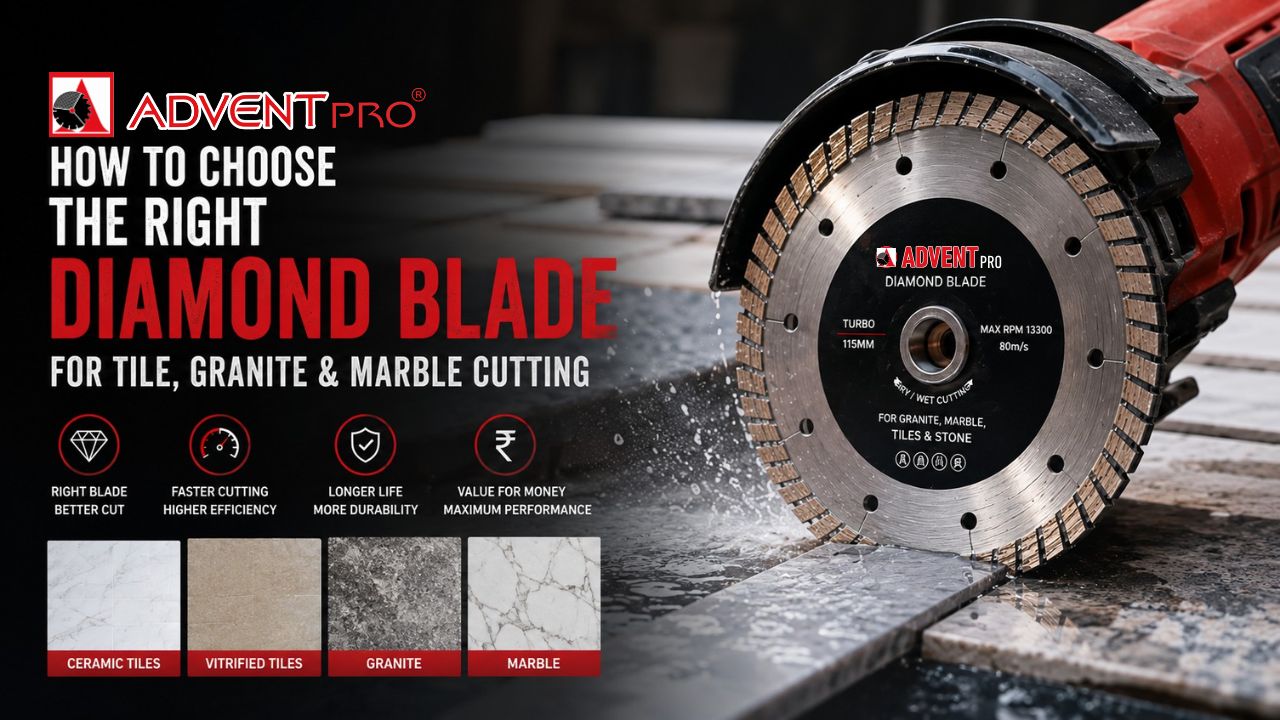
Read Time: 5–6 Minutes
Whether you’re a professional contractor, tile installer, fabricator, or workshop owner, the quality of your cut depends on one simple factor—the right diamond blade. Many users invest in premium power tools but overlook the importance of selecting the correct blade for the material they are cutting. The result is slower cutting, chipped edges, excessive blade wear, and unnecessary replacement costs.
Choosing the right diamond blade not only improves cutting accuracy but also increases productivity, extends blade life, and protects your equipment. In this guide, we’ll help you understand how to choose the ideal blade for different materials and applications.
Why Choosing the Right Blade Matters
Every material has different properties. Ceramic tiles, vitrified tiles, granite, marble, and concrete all require different cutting characteristics. Using a blade designed for one material on another can reduce cutting efficiency and significantly shorten the blade’s lifespan.
A properly selected blade offers:
- Faster cutting speed
- Cleaner and smoother finishes
- Reduced material wastage
- Less vibration during operation
- Longer blade life
- Better value for money
Professional results always begin with the right cutting accessory.
Understand the Material You’re Cutting
Before selecting a blade, identify the material you’ll be working with.
Ceramic Tiles
Ceramic tiles are comparatively softer and require clean, chip-free edges. Continuous rim diamond blades are ideal because they deliver smooth finishes without damaging the tile surface.
Vitrified Tiles
Vitrified tiles are denser and harder than ceramic. A premium turbo blade provides faster cutting while maintaining clean edges and reducing breakage.
Granite
Granite is one of the hardest natural stones. It requires high-quality segmented or turbo diamond blades that can withstand heavy-duty cutting while maintaining performance.
Marble
Although marble is softer than granite, it is more delicate and prone to edge chipping. Continuous rim blades offer greater precision and smoother finishes.
Choose the Right Blade Type
Different blade designs serve different purposes.
Continuous Rim Blade
Best suited for:
- Ceramic Tiles
- Marble
- Porcelain
- Vitrified Tiles
Advantages
- Smooth finish
- Minimal chipping
- High cutting precision
- Ideal for decorative work
Turbo Diamond Blade
Recommended for:
- Granite
- Marble
- Natural Stone
- Hard Tiles
Advantages
- Faster cutting speed
- Better cooling
- Excellent balance between speed and finish
- Longer service life
Segmented Diamond Blade
Suitable for:
- Concrete
- Stone
- Masonry
- Heavy-duty applications
Advantages
- Aggressive cutting
- Excellent heat dissipation
- Increased durability
- High productivity
Select the Correct Blade Size
Using the correct diameter is equally important.
Common sizes include:
- 105 mm – Compact angle grinders
- 115 mm – General-purpose cutting
- 125 mm – Professional applications
- 180 mm – Heavy-duty cutting
- 230 mm – Industrial construction work
Always verify your machine’s specifications before installing a blade.
Wet Cutting vs Dry Cutting
Some diamond blades are designed specifically for wet cutting, while others are suitable for dry applications.
Wet Cutting
- Better cooling
- Less dust generation
- Longer blade life
- Cleaner finish
Dry Cutting
- Greater portability
- Faster setup
- Convenient for site work
If your application allows, wet cutting generally provides superior blade performance and longevity.
Tips to Maximize Blade Life
Even the best blade requires proper handling.
Follow these best practices:
- Use the blade only for its recommended material.
- Avoid excessive pressure during cutting.
- Let the blade cut at its own speed.
- Never exceed the maximum RPM rating.
- Inspect the blade regularly for wear or damage.
- Store blades in a clean and dry environment.
- Ensure proper alignment before every cut.
Simple maintenance habits can significantly improve cutting efficiency while reducing operating costs.
Common Mistakes to Avoid
Many users unintentionally reduce blade life by making avoidable mistakes.
These include:
- Using a worn-out blade beyond its service life
- Cutting multiple materials with the same blade
- Incorrect machine speed
- Poor blade installation
- Applying excessive force
- Ignoring cooling requirements
Avoiding these practices helps maintain consistent cutting performance and improves workplace productivity.
Why Professionals Choose ADVENTPRO
At ADVENTPRO, every diamond blade is engineered to deliver consistent cutting performance across demanding industrial applications. Manufactured using premium raw materials and advanced production techniques, our blades are designed for durability, precision, and long operational life.
Whether you’re cutting ceramic tiles, vitrified tiles, marble, granite, or natural stone, ADVENTPRO provides solutions trusted by contractors, fabricators, dealers, and industrial professionals.
Our focus is simple:
- Reliable Performance
- Superior Durability
- Precision Engineering
- Excellent Value for Money
Conclusion
Selecting the right diamond blade is one of the easiest ways to improve cutting quality, reduce downtime, and increase the lifespan of both your blade and power tool. Understanding the material, choosing the correct blade type, and following proper operating practices will help you achieve cleaner cuts and better productivity on every project.
When performance matters, choosing the right blade makes all the difference. Explore ADVENTPRO’s range of premium diamond cutting solutions and experience precision engineered for professionals.