
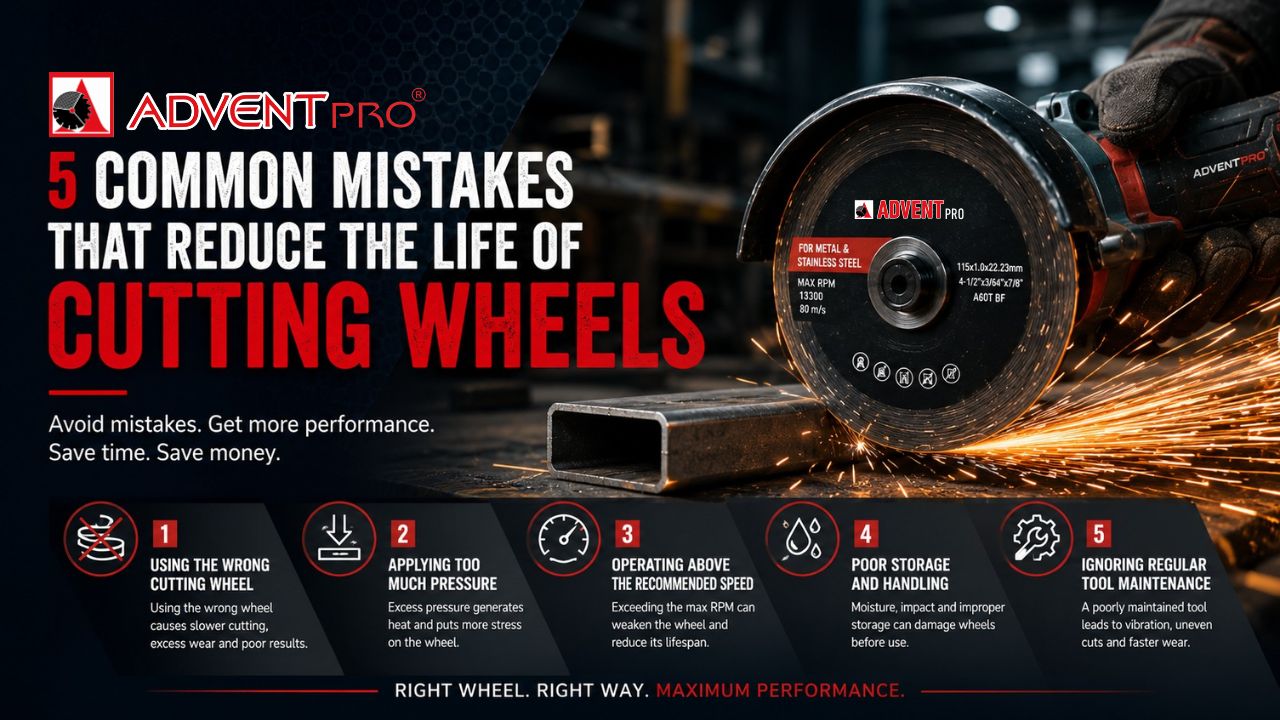
Cutting wheels are among the most frequently used accessories in fabrication workshops, construction sites, engineering units, and maintenance operations. Yet many professionals unknowingly shorten the life of their cutting wheels through improper usage.
A cutting wheel is designed to deliver fast, accurate, and efficient cutting. However, incorrect handling, excessive pressure, or choosing the wrong wheel for the job can lead to faster wear, poor cutting quality, increased costs, and even damage to your power tool.
If you want maximum performance and better value for money, avoiding a few common mistakes can make a significant difference. Here are five of the most common errors and how to prevent them.
1. Using the Wrong Cutting Wheel for the Material
One of the biggest mistakes professionals make is using the same cutting wheel for every application. Metal, stainless steel, cast iron, and other materials have different properties and require wheels designed specifically for them.
Using the wrong wheel often results in:
- Slower cutting speed
- Excessive heat generation
- Faster wheel wear
- Rough and uneven cuts
- Increased operator fatigue
Always read the product specifications before starting a job. A wheel designed for mild steel may not deliver the same performance on stainless steel or hardened materials.
Pro Tip
Choose a premium-quality cutting wheel that matches your application rather than opting for a general-purpose solution every time.
2. Applying Too Much Pressure
Many users believe pressing harder will make the wheel cut faster. In reality, excessive pressure creates unnecessary friction and heat.
Instead of improving productivity, it often causes:
- Faster wheel wear
- Reduced cutting efficiency
- Uneven cuts
- Increased load on the grinder
- Higher chances of wheel damage
A quality cutting wheel is engineered to remove material efficiently with minimal force.
Best Practice
Allow the wheel to cut naturally. Maintain a steady grip and let the grinder’s speed do the work instead of forcing the wheel through the material.
3. Operating Above the Recommended Speed
Every cutting wheel has a maximum operating speed (RPM) printed on its label. Using a grinder that exceeds this limit can significantly reduce wheel life and compromise performance.
Before installing a new wheel:
- Check your grinder’s RPM.
- Ensure it matches the wheel’s maximum rating.
- Never operate beyond the specified limit.
Ignoring this simple step not only affects cutting quality but also places unnecessary stress on the wheel and the power tool.
4. Poor Storage and Handling
Even the highest-quality cutting wheels can lose their effectiveness if stored incorrectly.
Exposure to moisture, humidity, direct sunlight, or physical damage may weaken the wheel before it is even used.
Store Your Cutting Wheels Properly
- Keep them in a dry environment.
- Store them flat or in their original packaging.
- Protect them from impacts and heavy objects.
- Avoid exposing them to excessive heat or moisture.
Proper storage preserves wheel integrity and ensures consistent performance throughout its service life.
5. Ignoring Regular Tool Maintenance
A cutting wheel performs only as well as the machine it is attached to.
Many professionals replace cutting wheels without checking the condition of their grinder.
Common maintenance issues include:
- Worn spindle flanges
- Loose mounting
- Damaged guards
- Excessive vibration
- Poor bearing condition
These problems increase wheel wear and reduce cutting accuracy.
Routine Inspection Checklist
Before every job:
✔ Inspect the wheel for cracks or damage.
✔ Tighten the mounting correctly.
✔ Verify spindle alignment.
✔ Check the grinder guard.
✔ Ensure the machine is clean and operating smoothly.
A well-maintained power tool extends both wheel life and overall productivity.
Additional Tips for Longer Wheel Life
Professional users often follow a few simple habits that improve performance considerably.
- Use only high-quality cutting wheels.
- Start the grinder before contacting the material.
- Avoid twisting or side loading the wheel.
- Replace worn wheels before performance drops significantly.
- Select the correct wheel thickness for the application.
- Allow the wheel to cool during continuous heavy-duty work.
These practices not only improve cutting efficiency but also reduce downtime and replacement costs.
Why Quality Makes the Difference
Not all cutting wheels are manufactured to the same standard.
Premium cutting wheels are produced using carefully selected abrasives, reinforced fiberglass mesh, and advanced bonding technology. This combination provides:
- Faster material removal
- Cleaner cuts
- Longer operating life
- Better heat resistance
- Improved stability during operation
Although premium wheels may have a slightly higher initial cost, they often deliver better value by lasting longer and requiring fewer replacements.
Why Professionals Choose ADVENTPRO Cutting Wheels
At ADVENTPRO, our cutting wheels are engineered for demanding industrial applications. Designed using premium raw materials and manufactured under strict quality standards, they deliver reliable performance in fabrication workshops, construction sites, engineering industries, and maintenance operations.
Professionals trust ADVENTPRO because our products offer:
- Faster Cutting Performance
- Excellent Durability
- Reduced Wheel Wear
- Smooth and Accurate Cuts
- Outstanding Value for Money
Whether you’re handling daily fabrication work or large-scale industrial projects, ADVENTPRO cutting wheels are built to keep you productive.
Conclusion
Getting the best performance from your cutting wheels doesn’t depend only on the product—it also depends on how you use it. Choosing the right wheel, operating it correctly, maintaining your power tool, and following proper storage practices can significantly extend wheel life and improve overall efficiency.
Small changes in daily work habits can reduce operating costs, improve cutting quality, and increase productivity.
When quality and performance matter, trust ADVENTPRO cutting wheels to deliver reliable results—cut after cut.