
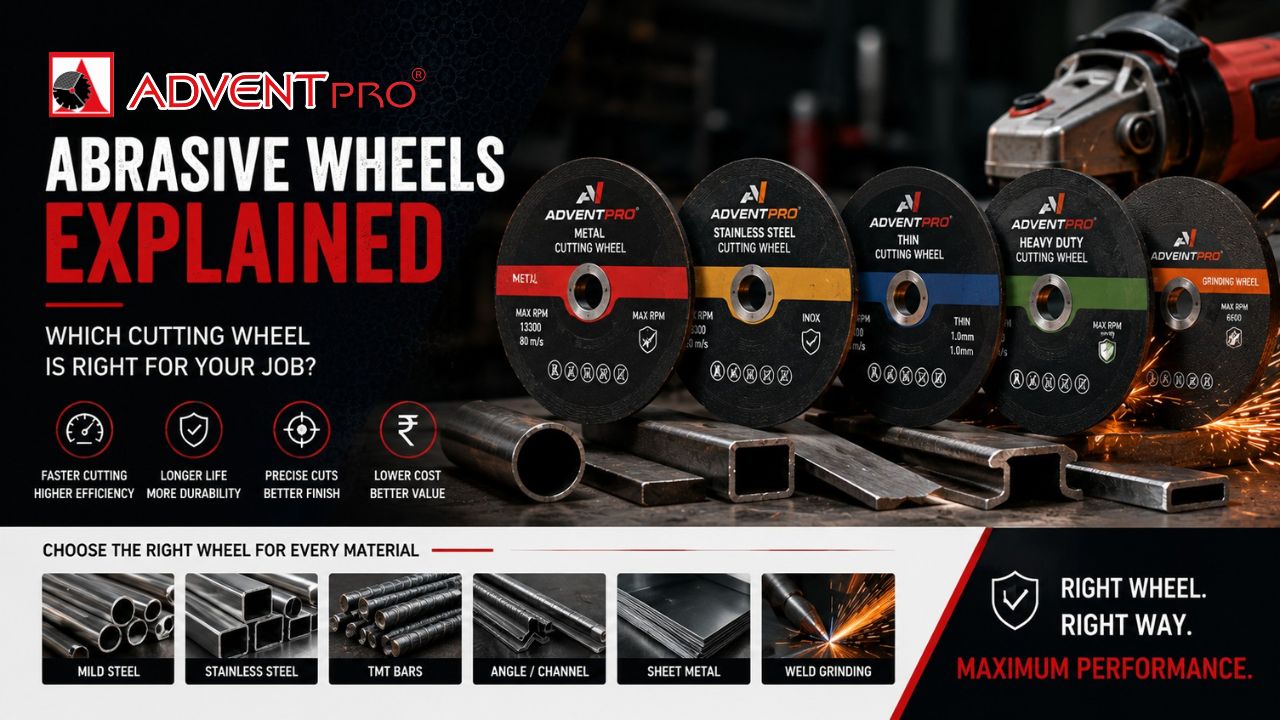
Choosing the right cutting wheel isn’t just about getting the job done—it directly affects cutting speed, wheel life, finish quality, and overall operating cost.
Many professionals unknowingly use the wrong wheel for the material they’re cutting. The result? Slower performance, excessive wear, poor finishes, and unnecessary replacement costs.
Whether you’re a fabricator, welder, contractor, workshop owner, or industrial buyer, understanding different abrasive wheels helps you achieve cleaner cuts with maximum efficiency.
Why the Right Cutting Wheel Matters
A cutting wheel is designed to work with specific materials and operating conditions.
Using the correct wheel provides:
- Faster cutting
- Less vibration
- Reduced heat generation
- Longer wheel life
- Cleaner cutting edges
- Better operator control
- Lower overall operating cost
Using an unsuitable wheel often leads to wheel glazing, excessive sparks, overheating, and premature wear.
1. Metal Cutting Wheels
Metal cutting wheels are the most commonly used abrasive discs across workshops and fabrication industries.
Ideal for:
- Mild Steel
- Carbon Steel
- Structural Steel
- Iron Sections
- Pipes
- Angles
- Flats
- Channels
These wheels offer fast cutting with minimal material loss and are suitable for everyday fabrication work.
Common Applications:
- Steel fabrication
- Construction
- Engineering workshops
- Industrial maintenance
- Pipe fabrication
2. Stainless Steel Cutting Wheels (INOX)
Stainless steel requires a specialized abrasive wheel.
INOX cutting wheels are manufactured without iron, sulfur, or chlorine contamination, helping maintain the corrosion resistance of stainless steel after cutting.
Perfect for:
- Stainless Steel Pipes
- SS Sheets
- Food Processing Equipment
- Pharmaceutical Equipment
- Kitchen Equipment
- Decorative Fabrication
Benefits include:
- Burr-free cutting
- Reduced discoloration
- Cleaner finish
- Better precision
3. Thin Cutting Wheels
Thin wheels (typically 1 mm to 1.2 mm) are designed for speed and precision.
Advantages:
- Faster cutting
- Less heat generation
- Reduced material wastage
- Smooth finish
- Lower operator fatigue
These are widely used where finish quality is important.
Suitable for:
- Stainless steel
- Sheet metal
- Automobile fabrication
- Precision engineering
4. Heavy Duty Cutting Wheels
When working with thicker materials, heavy-duty wheels provide greater strength and durability.
Ideal for:
- Thick steel plates
- Heavy structural sections
- Industrial maintenance
- Manufacturing plants
- Shipyards
These wheels withstand higher cutting loads while maintaining stability throughout the operation.
5. Grinding Wheels
Unlike cutting wheels, grinding wheels are designed for material removal rather than slicing through metal.
Applications include:
- Weld grinding
- Surface preparation
- Edge finishing
- Rust removal
- Burr removal
- Bevel preparation
Grinding wheels have a thicker construction that allows them to withstand side pressure during grinding operations.
Factors to Consider Before Buying a Cutting Wheel
Material Type
Always choose a wheel designed for the material you’re cutting.
Different materials require different abrasive formulations.
Wheel Diameter
Select the wheel size recommended by your angle grinder or cutting machine.
Common sizes include:
- 4 inch
- 4.5 inch
- 5 inch
- 7 inch
- 9 inch
- 14 inch
Using the wrong size can reduce performance and compromise safety.
Wheel Thickness
Thinner wheels:
- Faster cuts
- Better finish
- Lower heat
Thicker wheels:
- Higher durability
- Better for thicker materials
- Longer service life in heavy-duty applications
Maximum RPM Rating
Never use a wheel with a lower RPM rating than your machine.
Always check:
- Maximum RPM
- Maximum Speed
- Safety markings
This is one of the most important safety checks before installation.
Quality of Manufacturing
Premium cutting wheels are manufactured using:
- High-grade abrasive grains
- Strong resin bonding
- Reinforced fiberglass mesh
- Strict quality testing
Higher-quality wheels deliver consistent cutting performance while reducing breakage and replacement frequency.
Common Buying Mistakes
Many users accidentally reduce performance by making these mistakes:
- Buying based only on price
- Using one wheel for every material
- Ignoring RPM specifications
- Choosing incorrect thickness
- Purchasing low-quality products
- Storing wheels in damp environments
A quality wheel often lasts significantly longer and delivers better value over time.
Why Professionals Choose Premium Abrasives
Professional users focus on productivity rather than just initial cost.
Premium cutting wheels provide:
- Faster production
- Better finish quality
- Reduced downtime
- Longer service life
- Consistent cutting performance
- Lower cost per cut
For workshops handling hundreds of cuts daily, these benefits translate into meaningful savings.
Why Choose AdventPro Cutting Wheels?
At AdventPro, every cutting wheel is engineered for reliable performance under demanding industrial conditions.
Our products are designed to offer:
- Fast and smooth cutting
- High durability
- Extended wheel life
- Consistent quality
- Excellent value for money
- Reliable performance across multiple metal applications
Whether you’re working in fabrication, manufacturing, construction, or industrial maintenance, AdventPro cutting wheels are built to deliver dependable results every time.
Final Thoughts
Selecting the right abrasive wheel is one of the simplest ways to improve productivity, reduce costs, and achieve cleaner, more accurate cuts.
The correct wheel not only enhances performance but also extends tool life and minimizes downtime. By understanding your material, application, and machine requirements, you can make informed decisions that lead to safer and more efficient operations.
Choose the right wheel. Cut with confidence. Choose AdventPro.