When working with power tools, choosing the right cutting accessory can make a significant difference to cutting speed, finish, safety, and tool performance. Two terms that are often used interchangeably are abrasive wheel and cutting disc. Although both are designed for use with power tools and involve abrasive materials, they are not necessarily the same thing.
Understanding the difference between an abrasive wheel and a cutting disc can help you select the right product for metal cutting, grinding, fabrication, construction, and other applications.
In this guide, we explain what abrasive wheels and cutting discs are, how they differ, and which one you should choose for your specific requirement.
What Is an Abrasive Wheel?
An abrasive wheel is a tool made from abrasive particles bonded together to perform cutting, grinding, sharpening, or surface finishing operations.
These wheels are commonly used with angle grinders, bench grinders, die grinders, and other power tools. Depending on their design and application, abrasive wheels can be used to remove material, smooth rough surfaces, sharpen edges, or cut through certain materials.
Abrasive wheels are commonly available in different sizes, thicknesses, and specifications. The right wheel depends on the material being worked on and the type of operation being performed.
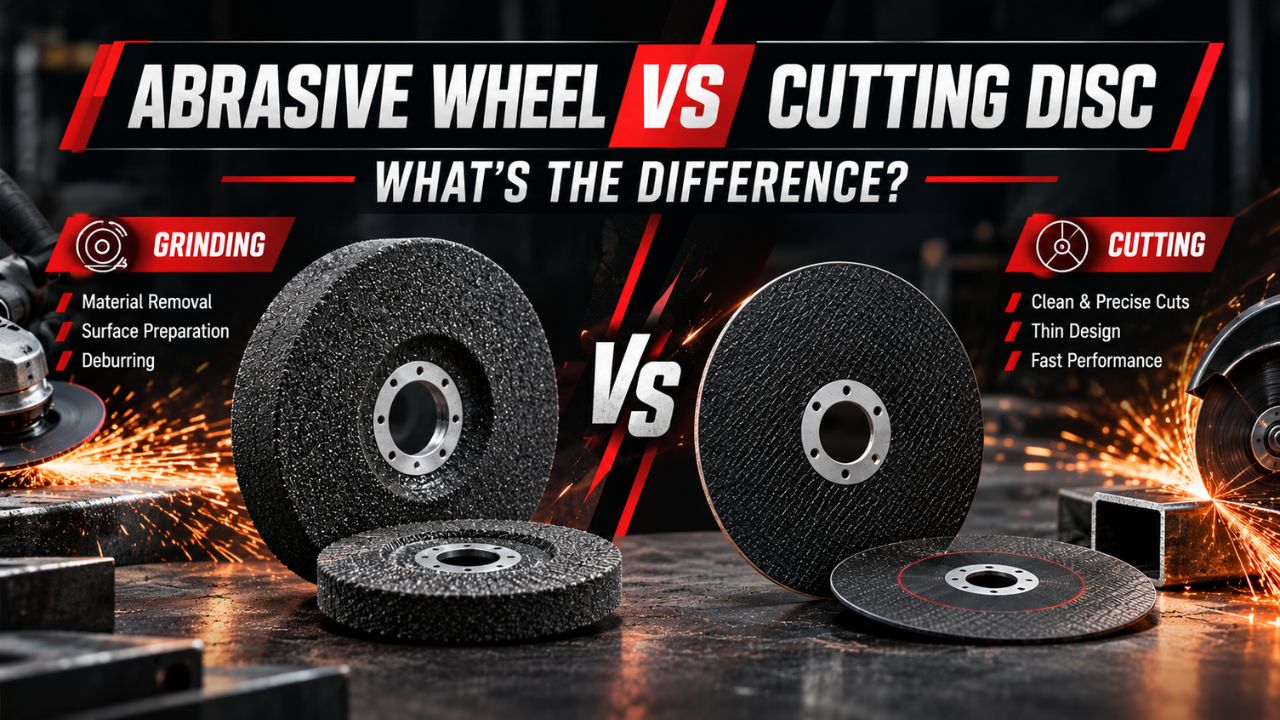
For example, a thicker abrasive wheel may be suitable for certain grinding applications, while a thinner wheel is generally preferred for faster and cleaner cutting.
What Is a Cutting Disc?
A cutting disc, also called a cutting wheel, is a thin abrasive disc specifically designed to cut through materials.
Cutting discs are widely used with angle grinders and other compatible power tools. They are commonly used for cutting materials such as mild steel, stainless steel, aluminium, pipes, sheets, rods, and other metal components, depending on the disc specification.
The primary purpose of a cutting disc is to make a narrow and controlled cut. Unlike a grinding wheel, a cutting disc is not designed for heavy side grinding.
Cutting discs are available in different diameters and thicknesses, allowing users to select a disc according to the machine, material, and application.
Abrasive Wheel vs Cutting Disc: Key Difference
The simplest way to understand the difference is this:
An abrasive wheel is a broader category of abrasive tools, while a cutting disc is a specific type of abrasive disc designed primarily for cutting.
The two may look similar, but their construction and intended use can be different.
| Feature | Abrasive Wheel | Cutting Disc |
|---|---|---|
| Primary purpose | Cutting, grinding or surface work depending on type | Cutting |
| Design | Available in different designs and thicknesses | Generally thin for narrow cuts |
| Common use | Grinding, material removal and some cutting applications | Cutting metal and other compatible materials |
| Side pressure | Depends on wheel type | Generally not intended for side grinding |
| Material selection | Depends on application | Must match the material being cut |
| Typical equipment | Grinders and other compatible machines | Angle grinders and compatible cutting machines |
When Should You Use a Cutting Disc?
A cutting disc is the better choice when your primary requirement is to cut material cleanly and efficiently.
For example, a cutting disc can be used for applications such as:
- Cutting metal pipes
- Cutting steel rods and bars
- Cutting metal sheets
- Cutting profiles and sections
- Fabrication work
- Construction and renovation work
- Workshop applications
- General metal cutting
A thin cutting disc can produce a relatively narrow cut, which can help reduce material wastage and make cutting more efficient.
However, always ensure that the disc is specifically rated for the material and machine being used.
When Is an Abrasive Wheel More Suitable?
If your work involves grinding, surface preparation, deburring, or material removal, a suitable abrasive wheel may be more appropriate.
Grinding wheels are commonly used to:
- Remove excess material
- Smooth rough metal surfaces
- Remove burrs
- Prepare welded joints
- Clean and shape metal surfaces
- Perform general grinding operations
For example, after welding two metal components, a grinding wheel can be used to smooth the weld area and prepare the surface for further finishing.
This is where selecting the correct abrasive product becomes important. Using a cutting disc for grinding or applying excessive side pressure to a cutting disc can be unsafe and may damage the disc.
Why Does Thickness Matter?
One of the most important differences users notice between cutting discs and grinding wheels is thickness.
Cutting discs are generally thinner because they are designed to pass through a material and create a cut. A thinner disc can provide a narrow kerf and efficient cutting.
Grinding wheels are generally thicker and designed to withstand the forces associated with grinding and material removal.
However, thickness alone should never be the only factor when selecting a disc. Diameter, maximum RPM, material compatibility, machine specifications, and application should also be considered.
Can You Use a Cutting Disc for Grinding?
This is a common question, especially among new power-tool users.
A cutting disc should not be treated as a grinding wheel.
Cutting discs are designed primarily for cutting operations. Using the side of a cutting disc for aggressive grinding can place forces on the disc that it was not designed to handle.
For grinding, use a grinding wheel or other accessory specifically designed for that application.
Similarly, simply choosing a thicker wheel does not automatically make it suitable for every grinding or cutting operation. Always follow the manufacturer’s instructions and safety recommendations.
How to Choose the Right Disc
Before purchasing an abrasive wheel or cutting disc, consider the following factors:
1. Material
Identify the material you are going to cut or grind. Metal, stainless steel, stone, masonry, and other materials may require different abrasive products.
2. Machine Compatibility
Check the specifications of your angle grinder or other power tool. The disc diameter, bore size, and maximum RPM must be compatible with the machine.
3. Application
Decide whether you need to cut, grind, deburr, clean, or finish a surface. Choose an accessory specifically designed for the job.
4. Disc Thickness
For cutting applications, the appropriate thickness can affect cutting speed and control. For grinding, the wheel construction should be suitable for material removal and surface work.
5. Quality and Safety
Always choose a reliable, properly rated abrasive product. Inspect the disc before use and never use one that is cracked, damaged, or past its recommended service condition.
Safety Tips for Using Abrasive Wheels and Cutting Discs
Power tools can deliver excellent performance, but safe operation should always come first.
When using abrasive wheels or cutting discs:
- Always wear appropriate eye and face protection.
- Use suitable gloves and protective clothing where appropriate.
- Make sure the disc is compatible with the power tool.
- Check the maximum RPM rating before installation.
- Inspect the disc for visible damage before use.
- Secure the workpiece properly.
- Allow the disc to reach the appropriate operating speed before starting the cut or operation.
- Do not force the disc through the material.
- Never use a cutting disc for side grinding.
- Follow the manufacturer’s operating and safety instructions.
Final Thoughts
The difference between an abrasive wheel and a cutting disc mainly comes down to design and intended application.
Abrasive wheels are used across a range of applications, including grinding, material removal, surface preparation, and, depending on the specific wheel, cutting. A cutting disc is specifically designed to make cuts through compatible materials and is generally thinner to provide efficient cutting.
Choosing the correct accessory can improve cutting performance, extend tool life, reduce material wastage, and improve overall workplace safety.
Whether you are working in a professional fabrication workshop, construction environment, woodworking setup, or performing general maintenance, always select the abrasive product based on the material, application, machine specifications, and manufacturer’s recommendations.
For reliable performance, the right tool accessory matters just as much as the power tool itself. Advent Pro offers a range of power tools, abrasive wheels, cutting blades, and related accessories designed to meet the requirements of professionals and everyday users.